Riverside highlight
Birthplace of California’s commercial navel orange industry
Beginning in 1873 when Eliza Tibbets planted Brazilian navel orange trees, Riverside transformed into the birthplace of California's commercial citrus empire within a single generation.
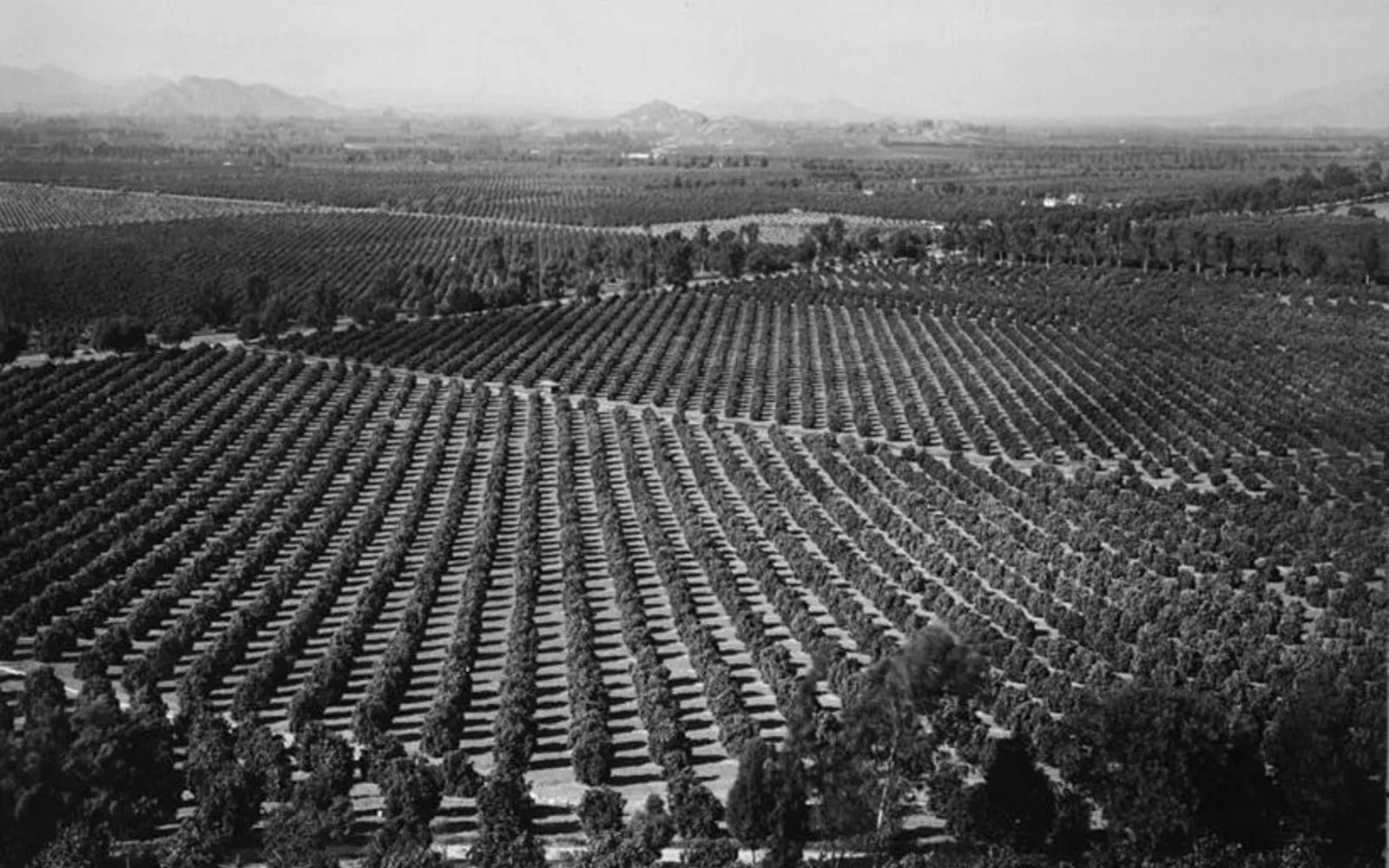
The story of Riverside's citrus fortune began with Eliza Tibbets, who in 1873 received two Brazilian navel orange trees from William Saunders at the Department of Agriculture in Washington. She planted them in her Riverside garden, and they thrived in the Southern California climate. Word of the superior fruit spread quickly through the region, and other growers followed her example. By 1882, California held over half a million citrus trees, and nearly half of them were rooted in Riverside County.
The industry's explosive growth depended on two technological innovations that made commercial agriculture possible. Refrigerated railroad cars allowed growers to ship delicate fruit to markets across the country without spoilage, and advanced irrigation systems transformed dry inland valleys into productive groves. Riverside's position, elevation, and water access made it ideal for the crop. By 1895, the wealth generated by citrus had made Riverside the wealthiest city per capita in the entire United States, a remarkable transformation accomplished in just two decades.
The original navel orange trees that started this agricultural boom have long since been harvested, but one parent tree still stands in the Magnolia Center neighborhood, fenced and protected as a living reminder of what an agricultural community built in one generation. That spirit of building for the future—investing in a stable foundation for the years ahead—is what draws families to think about life insurance. A term policy sized to your household's income and obligations is practical infrastructure for the people who depend on you.